Use Case IV
Advancing Cardiac MRI for better INOCA diagnosis
This use case aims to transform the diagnosis of patients with stable angina, particularly those with Ischemia with No Obstructive Coronary Arteries (INOCA), by shifting from an invasive, fragmented diagnostic approach to a more integrated and patient-centred pathway.
A significant proportion of patients with angina do not present obstructive coronary artery disease, yet they are often referred for invasive procedures that may not provide a definitive diagnosis and can pose unnecessary risks.
The goal is to enable a safer, more comprehensive diagnostic strategy that improves accuracy, reduces patient burden, and enhances the overall diagnostic experience.
Partners involved:
- Philips Medical System Technologies, Netherlands
- University Hospital Bonn, Germany
- University Medical Centre Utrecht, Netherlands
- CNIC, Spain
- Wavy Assistant, Netherlands
- Samsung, UK
Innovate
Redefining diagnosis and management
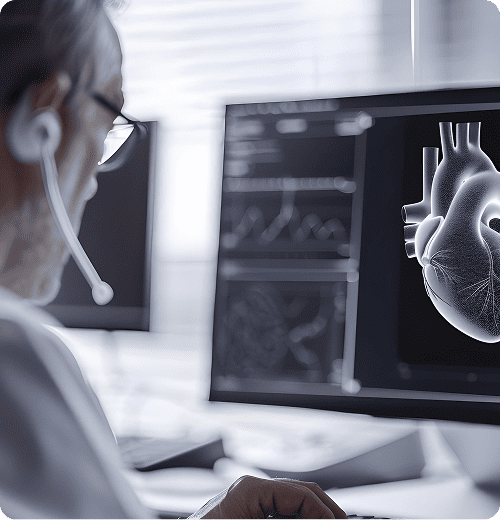
This use case seeks to redefine cardiac Magnetic Resonance Imaging (MRI) as a comprehensive, non-invasive diagnostic solution capable of assessing multiple aspects of cardiac function within a single session. Current approaches often require multiple tests or invasive procedures to evaluate ischaemia, cardiac structure, and coronary function, leading to longer and more complex diagnostic pathways.
By integrating advanced imaging workflows and streamlined processes, the initiative enables a more efficient and standardised diagnostic pathway, reducing variability and making advanced cardiac imaging more accessible in routine clinical practice.
A patient-centred approach plays a key role, improving comfort and reducing anxiety during MRI exams through tailored guidance and support. In addition, enhanced pre- and post-diagnostic follow-up allows for more personalised care and better continuity throughout the patient journey.
Towards a non-invasive and more efficient diagnostic pathway
By enabling a comprehensive cardiac assessment in a single, non-invasive session, this use case addresses current limitations in the diagnosis of stable angina, including the need for multiple tests, limited diagnostic integration, and the overuse of invasive procedures.
This approach supports earlier and more accurate diagnosis, improves patient safety and experience, and optimises the use of healthcare resources by reducing unnecessary invasive investigations and streamlining clinical decision-making.
Key expected outcomes include:
Higher patient preference for non-invasive CMR diagnostics
over traditional invasive testing.
Increased adoption of advanced cardiac MRI workflows
supporting broader use in routine clinical practice.
Higher utilisation rates of cardiac MRI
enabled by improved efficiency and accessibility.
Validation of cardiac MRI as an accurate diagnostic tool
including its ability to characterise different INOCA subtypes.
Improved quality of life for patients
through a safer, more comfortable, and patient-centred diagnostic pathway.
Partners involved